Showing posts with label blueray movies. Show all posts

Monday, October 6, 2014

Strike: Remastered Edition (1925)

Strike: Remastered Edition(THE) STRIKE was the first film made by Sergei Eisenstein. The film is a tragedy, ending in annihilation, and it does not seem to have a final resolution other than the ending title card "Remember!" That the crowned heads of Europe imposed a regime of repression upon their people for a whole century from the fall of Napoleon to the end of the First World War is a well documented fact, and so this film does not actually go over the top in portraying it. In fact, there is a lot of humor along the way, which is found off-putting by some reviewers. This humor probably belongs to a tentative strand of thinking that was going on in the Soviet film industry at the time. While STRIKE was in production, Protazanov's blend of whimsy and realism, the science fiction classic AELITA opened in Moscow, and the theater facade was decked with gigantic figures of the King and Queen of Mars. The crush of patrons was so great that the director himself was unable to get into the theater, and had to miss the premiere. This popular success seems to have frightened the Soviet authorities, and Protazanov was put on a leash, and Eisenstein himself never indulged in such antics as these again. Then there would be only the straight propagandistic melodrama of OCTOBER and MOTHER and so forth.

Of course, STRIKE is propaganda, too. Notably, we do not know the names of any single character until after he or she is dead. The worker who hangs himself leaves behind a suicide note, and only then do we find out his name. That is the trigger that launches the strike. At the end, after the massacre, a single title card appears with a bunch of first names. These two title cards cannot disguise the fact that we do not really have characters in this film, but archetypes--the manager, the stock holder, the strike leader, the spies (of a number of different kinds), etc.

The blu-ray is a magnificent presentation of the film. I cannot compare it with any of the several DVD releases, but I have a twenty-year old laserdisc from the boxed set on Soviet cinema, and the blu-ray transfer is much superior in every way (but one). The blu-ray shows more perimeter to the picture, and especially on the top side of the screen. That gives the film more headroom, and it really makes a difference in the full portrayal of the art of Eisenstein. Cut-off heads is one of my biggest gripes about silent film on home video. There is one magnificent take early in the film, projected in reverse, going from feet standing in a puddle, moving away, the puddle clears to show the reflections of smokestacks, then conspirators walk backwards into the reflection. When I was watching the cropped picture on the laserdisc I couldn't see clearly the technique that Eisenstein was using. It all became crystal clear while watching the blu-ray. Both picture and sound are excellent--the sound on the loud side, so I had to turn down my amp.

The laserdisc and blu-ray are produced from different prints, and they have damage in different places, mostly in the opening reel. These things might have been repaired, but do not detract greatly from the presentation.

I mentioned that there was one way I preferred the laserdisc, and that was in preserving the original Russian intertitles. While I do not read Russian, I find that having the original titles there helps remind me that we are, after all, watching a film from Russia. Also, in the case of this film, the titles interact with the film in a unique way. About two minutes into the film there is one title that playfully morphs into the following footage. That one original title was retained on the blu-ray, but all the others were replaced with oversized English titles. The original titles were medium sized, appropriate for the size of the screen. Use of the large type makes the film seem even more didactic and doctrinaire than it is. It certainly would have been possible to give us an option of Russian or English intertitles, as was done with the blu-ray release of Battleship Potemkin. Again, I say that something is lost when the original titles are entirely replaced, even when the new ones have high definition as in this case.

So, to document the film in its original release format, I am keeping the laserdisc. But I will be watching the blu-ray for the film itself. I think it is flat-footed at the end, but there are so many brilliant moments along the way that make the film rewarding to see again and again. The blu-ray maximizes those moments.

If the quick and easy label is to call Sergei Eisenstein the Orson Welles of Soviet cinema, chronology notwithstanding, then "Strike" ("Stachka") is the great director's "Citizen Kane." This comparison would be dictated not by the greatness of this 1924 silent film, but rather by the fact "Strike" was Eisenstein's debut film. What the young Eisenstein clearly has in common with the young Welles is the reckless creativity of a kid with a brand new toy. The story is about the strike of factory workers in Czarist Russia in 1912, which ends with the rebellious comrades being brutally beaten down.

Eisenstein might be consumed with exploring the boundaries of cinematic technique, but he does evince some basic storytelling skills here. The climatic tragedy is set up initial comic element, which gain our sympathy for the workers on a human rather than an ideological level. Certainly a management that brings in spies and agents to infiltrate the oppressed workers cannot be supported. The strike begins after a factory worker, falsely accused of being a thief, hangs himself. The initial excitement over the prospects of success faded as the strike goes on and on. When the provocateurs hired by management finally bring things to a head, the tired and hungry workers are no match for the military troops that come to crush them. "Strike" features Grigori Aleksandrov as the Factory Foreman, Aleksandr Antonov as a Member of Strike Committee, Yudif Glizer as the Queen of Thieves, and I. Ivanov as the Chief of Police.

The more you know about Eisenstein's later works, the more you will recognize the raw cinematic techniques he displays in his first film as being refined in his later masterpieces. I know the obvious comparison is to look at "Battleship Potemkin" after screening "Strike," but I think the most profitable analog is with Alexander Dovzhenko's 1929 "Arsenal," which deals with a similar subject, namely a 1918 strike by Bolshevik works in Kiev. "Strike" runs 75 minutes and this Kino on Video edition has been digitally mastered from a mint 35mm print taken from the original negative. The presentation of this silent film is enhanced by a new score by the Alloy Orchestra.

Buy Strike: Remastered Edition (1925) Now

An epic feature film debut by filmmaker and film theorist Sergei Eisenstein. A precursor to the violence and large scale fights shown in his later films, "Strike" will continue to resonate strongly with cinema fans, especially for its famous final sequence.

The great Russian director Sergei Eisenstein, known for films such as the 1938 "Alexander Nevsky" and the 1944-1946 films "Ivan the Terrible" and a filmmaker who will be remembered for is his 1925 masterpiece "The Battleship Potemkin".

But a year before "Battleship Potemkin", "Stachka" aka "Strike" was created in 1925 and in Eisenstein's polemic cinematic style featured a theme of collectivism versus individualism and also featured the talent of the Proletcult Theatre.

"Strike" is a film that takes place during the Czarist rule and showcases workers of a Russian factory. The morale of the workers are low and while these workers work very long hours for little pay, the owners and higher up of the factory are shown as porkly characters that could care less about the employees but are more concerned of making money, eating and drinking well and getting rich.

Featured in six parts, the film begins with the following quote by Vladimir Lenin:

The strength of the working class is organization. Without organization of the masses, the proletarian is nothing. Organized it is everything. Being organized means unity of action, unity of practical activity.

VIDEO & AUDIO:

"Strike" is presented in 1080p High Definition (1:33:1) and is presented in Linear PCM 2.0 Stereo (music performed by the Mont Alto Motion Picture Orchestra). The edition featured on Blu-ray of "Strike" is a version mastered in HD from a 35 mm film element restored by the Cinematheque de Toulouse.

While it is is expected to see white specks and a little film damage, the picture quality is magnificent. If you have seen this film before and have seen versions that get to the point where the visuals keep fading to black, no problem whatsoever in the picture quality of this film on Blu-ray.

The clarity is well-done, especially the closeups of the various individuals. Tonal gradation, black levels and contrast is also magnificent and this is the best looking version of the film to date. I detected no softness, no artifacts, no excessive degradation of the original film elements (There are a few scenes which show this slight whiteness but it's for a second or two and doesn't disturb your viewing of the film.

The overall look of the film compliments Eisenstein's direction and the cinematography by Vasili Khvatov, Vladimir Popov and Eduard Tisse.

Also, the music by the Mont Alto Motion Picture Orchestra was well-done and complimented the film extremely well!

SPECIAL FEATURES

"Strike" comes with the following special features:

GLUMOV'S DIARY (4:43) For years considered lost, Eisenstein's first film "Glumov's Diary" (1924) is a playful experimental short made for his stage production of Alexander Ostrovsky's Enough Stupidity in Every Wise Man.

EISENSTEIN AND THE REVOLUTIONARY SPIRIT (37:10) Film historian Natacha Laurent places Eisenstein's work in the context of the Communist revolution and contemporary Soviet filmmaking.

Battleship Potemkin Trailer (1:32) Theatrical trailer for Kino's "Battleship Potemkin".

EXTRAS:

"Strike" comes with a slipcase cover.

JUDGMENT CALL:

A magnificent, groundbreaking film that still has relevance today!

Sergei Eisenstein's "Strike" is a straightforward film. Workers are mistreated, higher-ups are the ones who receive the benefits and when workers want to be treated well, their employers turn on them and the results are tragic.

Of course, in the United States, although strikes do happen and mediation between companies work hard to solve the issues, what we see in "Strike" still happens today in other countries (especially in China where several employee strikes in 2001 have turned violent due to worker's working very long hours and receiving unfair wages).

And in cinema, America has had its share of strike films with "The Grapes of Wrath", "Bound for Glory", "Norma Rae" to name a few. But what makes Eisenstein's "Strike" so amazing is what was accomplished back in 1925 visually. For one, Eisenstein is a filmmaker who knows how to incorporate large masses of people and capture the realism of that era. In this case, workers on strike in 1903 (note: There was a South Russian strike of 1903 in Odessa but violence was minimal and led to an independent labor movement but I have read that the film is actually was intended to be part of a series that led to the 1917 Revolution which ended Tsarist Autocracy and led to the creation of the Soviet Union).

It's Eisenstein's focus on collectivism that comes forefront as American cinema tends to focus on the individual who may have led the strike or had a big part in it. No one actor becomes the protagonist. Strikers are a collective, the management and shareholders work as a collective.

And that is where Eisenstein shows his strength as a filmmaker, the utilization of composition and structure that achieves the film's efficacy.

Once again, the collective is the keyword to this film. Where many films would show a hero either being incarcerated, killed or simply being held on the pedestal for their achievement, its a banality that is often seen to well in cinema today and Eisenstein knew at the time that it's the collective that that should be featured and not one person goes down, all will suffer together.

Although I do not like to talk about the ending sequences of a film, "Strike" is one of those films where the majority of discussion of this film is primarily of its final scene. It's the most violent scene but also cinematography-wise, it's the most beautiful part of the film is seeing how Eisenstein used the visual aspects of the film to make it artistic but at the same time, no doubt, stirring up emotions of the Soviet people in the 1920's who watched the film.

If you do not want to be spoiled by my comments on the ending, please stop here and revisit after you watched the film.

"Strike" is well-known for its violent final scenes towards the collective mass interwoven with realistic scenery of a live cow being slaughtered are images that stick in your head. Without having to show hundreds of people marching to their demise, it was a well-executed plan to use the cow during that time, to be a symbol of the slaughter of humans. To show how people of the same blood but not of the same social status are looked down upon.

A mother tries to rescue her daughter who runs towards the military soldiers in their horses. These soldiers could care less and start beating on the mother and possibly the most disturbing scene, aside from the cow scene, was a soldier grabbing a baby and literally dropping the baby many levels below to its crashing death. While we see the workers tormented and running for their lives, it's a sickening juxtaposition of the exaggerated capitalist, laughing, fat and non-caring of their workers.

The bourgeoisie, the management, higher ups, shareholders, governor, police chiefs...they are the antagonist, the workers, the proletariat are the protagonists, the heroes of the film.

These scenes are quite haunting and although Eisenstein had created even more significant films after his filmmaking debut with "Strike", It is amazing to see the filmmaker create this aural effect through visual means.

Interesting enough, Eisenstein actually had a conceived a more violent film according to a record made of the completed final sequence which involved the decapitation of the cows heads, skinning of the cows and ending with a closeup of the cow's eyeball in order to correlate with the massacre of the workers.

As for the Blu-ray release, having owned the DVD, this film features the restoration courtesy of the Cinematheque de Toulouse and a newly-recorded score by the Mont Alto Motion Picture Orchestra who did a magnificent job. It's also great to have the "lost" short film "Glumov's Diary" included in this Blu-ray release but for fans of Eisenstein, the included "Eisenstein and the Revolutionary Spirit" was a wonderful addition to this release.

There are not many filmmakers who have had the freedom to create films with a large mass of people and also to use his films to have this polemic and propagandist tone. It's a groundbreaking film for its time that a cinemaeaste must experience as it is quite different than "Battleship Potemkin" and Eisenstein's other well-known works.

Overall, "Strike" on Blu-ray is highly recommended!

Read Best Reviews of Strike: Remastered Edition (1925) Here

The most noticeable thing about this film is the extremely fast editing. This is fast compared with modern films, but by its contemporaries, it's lightning fast. Eisenstein advocated what he called 'montage', meaning more the juxtaposition of two different or similar images by intercutting or fading between the two to allow the viewer to draw comparisons between the two images. This is sometimes subtle, and at other times blunt (such as the scene with the crowd being slaughtered being intercut with cattle being slaughtered). Nevertheless it allows Eisenstein to make a point that we are treating humans as cattle and also avoids visceral depiction of the killing of the humans, whilst giving us a shocking image that tells us what we need to know. The film is somewhat difficult to follow, even with subtitles, and I felt there were no real points of identification. The humour in the depiction of the Bourgeoisie lightened the tone in places, but the film still seems more like a political manifesto for the Bolsheviks than representation of reality. Years ahead of its time technically, but dated in content.

Want Strike: Remastered Edition (1925) Discount?

This early work by Sergei Eisenstein in its Blu-Ray restoration is a fine example of storytelling in chapters. The restoration is excellent, the added music sound track is appropriate and the crisp black and white images take one back to those industrial times and predatory capitalism. There is lots of "human nature" and character studies plainly laid out for the viewer.

Eisenstein, like Carl Theodore Dryer after him, never made a bad film is his like. I am hoping that Kino restore and reissue every film that Eisenstein, the Master Film maker ever made. I will buy all of them.

Save 37% Off

Wednesday, September 24, 2014

The Tempest (2010)

The TempestLet me say right off: I am a total Bardolator. I teach Shakespeare, I am obsessed with Shakespeare, I have read and seen all the plays, and my love affair with the Bard began with seeing a live performance of The Tempest in 1975. It was pure magic. I also love movies, and I believe that in the 21st century, filmed versions of Shakespeare's plays are probably the best way to reach the widest audience. The sneers and sniffs of snobs aside, I am convinved that if Will were alive today, he'd be writing movie screenplays (or even television), NOT stage plays, which today are aimed at a narrow, elite, theatre-going audience.

As a literature professor who has been teaching The Tempest for a decade now, I have always been singularly bemused by the lack of a filmed version that really captures the magical spirit of the play. The old TV Richard Burton show is well-acted but silly, the BBC version has great actors but terrible, flat production values, Prospero's Books is brilliant but incomprehensible to all but those who know the play intimately, Derek Jarman's version is terribly dated and, despite being a good "film," just doesn't work as The Tempest, in my opinion. The other, "scholastic" releases are plagued by poor production and/or undistinguished acting. And I won't even bother with "adaptations" of the plot, such as Forbidden Planet or Cassavettes's Tempest.

Until this version, the only truly excellent version of The Tempest was the HBO animated one, but at 25 minutes, not much of Shakespeare's story remained intact.

Just last week I had the great pleasure of seeing Julie Taymor's The Tempest in London. It was absolutely amazing. The magic was there! The acting, for the most part, was brilliant. The script contained enough of the actual play's language that the minor tweakings to make it easier for contemporary audiences did not bother me a bit. The visuals were absolutely stunning. The movie was a joy from start to finish. I can't wait to see it again--repeatedly--to savor all the special moments over and again. My only regret is that my students will be unable to see it this year due to the late release date.

[REVISION NOTE: This year's students had the opportunity to see this version, and they overwhelmingly LOVED it. It brought the play to life for them. At last, I no longer have to convince them that The Tempest really IS a great play! 01/19/12]

If you love Shakespeare, and if you enjoy movie adaptations of the plays, DO NOT MISS THIS ONE!

I saw this movie at the Chicago Film Festival last fall, introduced by Alan Cumming. While I'm a huge fan of Helen Mirren (and Alan), I was much less familiar with Julie Taymor, and not sure what I was in for.

If you're the same, then you can relax this is brilliant, and I wish that Mirren & Taymor would do some other Shakespeare plays with Helen in the (strong, male) lead. Aside from a few minutes in the very beginning, where I thought the verisimilitude of the storm interfered with actually being able to understand what the actors were SAYING there weren't any problems with either the language or being able to follow the plot.

Despite changing of the gender of the lead character, all the other elements we expect from Shakespeare remain intact: elevated, aristocratic figures bickering over their positions or inheritance, a love story featuring the younger generation of characters, a comedic subplot running alongside the primary plot, etc. And the acting was great top to bottom those who weren't aware that RusselL Brand could actually act will be very pleasantly surprised, and we get the amazing performances we expected from the "known" names. Reeve Carney comes off least well, but that is the fault of the character having so little to do (and most of THAT being to look attractive and moon over the young woman).

All in all, I was very happy I was able to catch this in the cinema, and can hardly wait until I'm able to own a copy.

Buy The Tempest (2010) Now

If you've been following the travails of Julie Taymor's Spiderman production for Broadway, you will understand them a little better once you watch the opening shipwreck scene in her version of The Tempest. It is elaborate and detailed and far removed from the play itself, which of course opens with a brief onboard scene and then goes to Prospero and Miranda on shore for a long scene of explication of their exile on the island. The genius in Taymor's take on the Tempest is to give us Prospera instead of Prospero and, especially, to give us Helen Mirren as Prospera. She is wonderful as always, and convincing throughout. I loved her delivery of the Act 4, Scene 1 "Our revels now are ended" speech that captures both the play and life itself in a few short lines. The rest of the cast, Chris Cooper, Russell Brand et al, is uniformly excellent except the young actor who plays Ferdinand and who reads his lines like he is, well, reading his lines from a script held in his hands. Taymor takes liberties with Shakespeare's text (the credits read something like "written by Julie Taymor based on a text by William Shakespeare") and Prospera's epilogue is a song over the closing credits, but overall this Tempest is in spirit faithful to the play and well worth seeing.

Read Best Reviews of The Tempest (2010) Here

The final Opus of William Shakespeare was carried to the big screen with that required vision, secure pulse and distinguished visuals without lacking the spirit of the play.

Helen Mirren is actually (Who can deny it?)one of the three best actresses in the world. She chews the whole show all the way through. But additionally the narrative rhtyhm never decays. Taymor (The Lion king and Titus, proves by far how domains Shakespeare's nerve) never abuses of the visual effects (dislike many of her colleagues).

And the outcome could not be more succesful. One of the best twenty films of the last year. No doubt it and go for it.

Want The Tempest (2010) Discount?

I'm a bit of a Shakespeare nut, owning the large majority of his plays on DVD, and often more than one version of the more popular plays. So I was eager for a new version of "The Tempest," and I wasn't able to catch this one in the theaters since it never played near where I live. Unfortunately nearly all of the reviews I had read of this version were decidedly mixed. Still, I wasn't going to let them keep me from seeing it. Well, I'm really glad I bought it because it's *much* better than the mixed reviews had led me to believe. Helen Mirren's excellent interpretation of "Prospero" as "Prospera" strikes me as quite natural -that is, it doesn't come across as a trendy gender-switching gimmick -and most of the other actors are superb as well. The "special effects," particularly with Ariel, are effectively handled. My only reservation, in fact, has to with Djimon Hounsou's performance as Caliban. He himself is, I believe, very good, but his strong accent sometimes makes it difficult to understand Caliban's speeches, which include some of the loveliest, most touching in the play. Nevertheless, I strongly recommend this DVD, which includes a terrific "making of" bonus extra.

Save 18% Off

Thursday, September 11, 2014

Clueless (1995)

CluelessThis new special edition is a definite improvement over the previous incarnation that had no real extras to speak of and so for fans of this movie it is definitely worth the double-dip. Watching these new extras is like revisiting the cast ten years later to see what they've been up to. They are done in the style of and maintain the same tone of the movie which is a nice touch.

"The Class of `95" examines how the film was cast. Heckerling talks about how she picked the actors. The main cast members, except for Silverstone and Jeremy Sisto, are all back to talk about how their involvement.

"Creative Writing" takes a look at the film's origins. The studio originally wanted Heckerling to write a TV show about an in-crowd group of teens but they didn't get it so she changed it into a movie.

"Fashion 101" examines the memorable costumes from the movie. What Cher and her friends wore reflected the personality of each character and ended up influencing what kids subsequently wore.

"Language Arts" is a crash course on the film's colourful slang. Heckerling had collected books and lists of slang over the years and incorporated it into the movie so that each character had their own way of speaking and favourite sayings that are now quoted endlessly by its fans.

"Suck `n Blow: A Tutorial" explains the party game that takes place in the film in an amusing featurette done during the production.

The challenge of shooting Dionne's driving lesson on the Los Angeles freeway is explored in "Driver's Ed." It was a logistical nightmare with all kinds of vehicles coming at the actors so that their scared reactions were genuine!

"We're History" features the cast and crew talking about what they think about the film ten years later. Not surprisingly, they are all proud of its legacy and how well it's aged.

Finally, there is a teaser and theatrical trailer.

This clever, modern retelling of Jane Austen's novel "Emma " was one of the best high-school theme films made in the past twenty years. Written and directed by Amy Heckerling ("Fast Times at Ridgemont High"; "Look Who's Talking) spent a year in the lives of several teens at various high schools in Los Angeles to give the filmgoer a truly authentic look at life among the young social elites of Southern California.

Alicia Silverstone ("Excess Baggage"; "Batman & Robin") stars as Cher Horowitz, a young, hip teen residing with her lawyer father (Dan Hedaya) in Beverly Hills. Along with best friend Dionne (Stacey Dash of "Mo' Money"), the girls are the doers of social good deeds at their high school. Whether it is trying to play matchmaker for two lonely teachers (playwright Wallace Shawn and Twink Caplan, who is also an executive producer of the film) or doing a serious make over for Tai (Brittany Murphy) a new, dowdy student from the east coast, Cher is the toast of the school among her peers.

However, playing matchmaker for others has made Cher realized that she too needs to find someone special in her life. Pestered by her ex-stepbrother Josh (Paul Rudd) in doping deeds that benefits others and not only herself, Cher discovers that what she truly needs is a spiritual makeover that will allow her to attain happiness and respect. Yet, she wonders why it bothers her so much on what Josh is thinking? As the story progresses, we discover that opposites attract and Cher has realized how "clueless" she was while looking for Mr. Right.

Wonderfully directed and casted,"Clueless" features some memorable performance by Julie Brown (as Ms. Stoger, the physical education instructor), Donald Faison (as Dionne's boyfriend Murray) and Justin Walker, as Christian Stovitz. Walker who plays his role with comedic sensibility is great and witty as the boy Cher has the hots for, although she has little knowledge about his background.

"Clueless" is one of the best films released in the 1990's due to his smart use of popular lexicon, icons, and attitudes that can be attributed to most American teenagers. This is Silverstone's greatest performance to date, seeing that most of her later works did not go well with critics or filmgoers. Although a television series based on the film was launched in 1997, it couldn't capture the charm, wit, and performances of this film. "Clueless" is a classic teenage film you can watch over and over again. It's destined to become a cult classic

Buy Clueless (1995) Now

Why is it the best teen movie of all time? Because it was hip, and it was smart. There was no gross-out humor or slapstick comedy. It was a big movie with a big heart. It's really hard not to fall in love with this movie.

Loosely based on Jane Austen's "Emma" (LOOSELY), "Clueless" revolves around a ditzy rich girl name Cher, whose life consists mostly of cell phones, trips to the mall, a killer wardrobe, and tons of guys drooling over her. Her best friend is Dionne, who is just as superficial as Cher. One day, a new girl, Ty, comes to school and inspires a project for Cher. Project: Makeover! What begins as a selfish way to make Cher think she's doing something to help mankind, turns into a really sweet, funny film.

Alicia Silverstone is wonderful in this movie, and sadly has not found any good roles since. A shame, since she is genuinly a great actress. This is also where Brittany Murphy got her big start, as the girl in desperate need of a makeover. And who didn't have a crush on Paul Rudd, who played her "annoying" older ex-stepbrother?

If you haven't seen this film yet, then, well, I'm wondering why. It was at one point my favorite movie, and it's still high up on my list. It's charming, sweet, funny, and smart. If only other teen movies could take notes from this one. Then we wouldn't have to sit through these ridiculous ones they keep putting out all the time ("American Pie" springs to mind...).

Read Best Reviews of Clueless (1995) Here

A wonderful up to date retelling of Jane Austen's, 'Emma'. Cher (Silverstone) has a privileged life, she goes to a great school and is popular along with her good friend Dionne (Dash).

She lives with her widowed father (Hedaya) and the only pebble under her perfectly manicured feet is her ex step-brother Josh (Rudd).

Cher loves to play matchmaker and can't resist the challenge when she meets the new girl in school, Ty, who isn't exactly 'popular' material at first glance. Having taken her under her wing and given her a complete makeover, Cher then tries to match her up with various boys.

This is alright until Ty takes a fancy to Josh and then Cher suddenly realises that she has feelings for him herself but who will get the man?

Silverstone is absolutely fantastic in this film. She handles the difficult role SO well and you can't help but really like Cher and want her to get the man of her dreams for all her obvious flaws.

Add a brilliant combination of comedy, both oneliners and visual, and the fact that it's literally such a colourful movie and you've got yourself a film that will leave you smiling for ages afterwards.

Want Clueless (1995) Discount?

The good news is that "Clueless" is witty and funny and doesn't sink into self-parody; the bad news is the rash of teen movies that followed and have consistently tried, and failed, to emulate its success. On the surface, the movie seems an homage to the materialistic snobbery of young America, but peel through the beaded curtains of shopping bags and Valley Girl-speak, and you'll find a light romantic comedy somewhere along the lines of, well, "Emma," the Jane Austen novel from which this movie comes.

This successful attempt to translate a classic into modern context doubles as an effective satire of the superficial teen culture generated on TV and in movies. You don't take these guys too seriously and because of that, the story is both fun and engaging. Cher, the pretty gum-popping, cell phone-toting heroine, loves clothes, boys, and her dad, in about that order. She manages everyone else's life just fine but is clueless when it comes to her own. Not only does she have to overcome normal teenage struggles like a doting dad, difficult homework, and rocky friendships, she's got to deal with matching her undergarments, dresses, and shoes, failing her driver's test, and falling in love with her ex-step-brother. Tough life, eh? But it's those little quirks along Cher's inflated path to self-discovery that make this movie such a gem. Her humorous approach and response to any situation immediately recalls Austen's Emma.

Critics can whine all they want about Alicia Silverstone, but she delivers a standout performance as Cher, giving her both brains and tenderness and giving us a character to care about. Cher is at once innocent, smart, sexy, compassionate, and mature. Silverstone is so convincing, she hasn't been able to escape her role. The supporting cast is excellent as well, especially Dan Hedeya as her overprotective yet loving father. This movie is full of heart, fun, and laughs and one that will stand multiple viewings; it's not a guilty pleasure, just a pleasure.

Save 13% Off

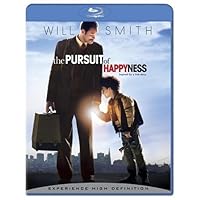
The Pursuit of Happyness (2006)

The Pursuit of Happyness"The Pursuit of Happyness" is an unabashed tearjerker about the American Dream and commitment to family in the face of great odds. It was inspired by the true story of Chris Gardner, who spent some time in the 1980s homeless while trying to care for his young son and make it through a stockbroker internship. The film is fictionalized but stays true to Gardner's struggle for success and dedication to his son. Gardner's autobiography, which goes by the same title, was actually published after the film was written. In San Francisco, 1981, Chris Gardner (Will Smith) can't make ends meet selling portable bone density scanners, while his embittered wife Linda (Thandie Newton) waitresses 2 shifts a day. Chris spies a man with an enviable sportscar on the street one day and asks him what he does for a living. He's a stockbroker. So Chris decides that's what he'll be. He must be at the top of his class after 6 months in Dean Witter's competitive internship program to be hired. Meanwhile, Chris has no wife, no money, no paying job, and a 5-year old son (Jaden Smith).

A story of hardship and hard work, paternal love and frustration, could easily be too saccharine for words. It's saved from this fate by Chris Gardner's desperation. Behind his indomitable pluck, Gardner is truly desperate. He has no money, no home, uncertain prospects, and the responsibility of providing for a young child. He hides his circumstances from his colleagues. He's spends an inordinate amount of energy chasing errant bone scanners around town. He compromises his ethics. His single-mindedness eventually takes a toll on his son. Chris is struggling for his life. And his financial problems are something the audience can understand and may themselves fear. That's why "The Pursuit of Happyness" works so well. Credit is due Will Smith's Oscar-nominated performance and Italian director Gabriele Muccino's understanding of intense emotions painted with small strokes.

The DVD (Sony 2007): There are 4 featurettes, the song "I Can" by Bebe Winans and Dave Koz (5 min, audio), and a feature commentary. "Making Pursuit: An Italian Take on the American Dream" (17 min) interviews Gabriele Muccino, Will Smith, and the producers about choosing Muccino to direct. Muccino talks about filming in San Francisco and working in English. "Father and Son: On Screen and Off" (7 min) recounts casting Jaden Smith after auditioning hundreds of other children, and Will Smith talks about working with his son. "The Man Behind the Movie: A Conversation with Chris Gardner" (12 min) interviews Gardner about his participation in the film, and Will Smith talks about learning from him. "Inside the Rubik's Cube" (6 min) is a fun short documentary on the persistent popularity of the Cube. There is a nice audio commentary by director Gabriele Muccino, in English. Muccino tells us how he got the job, discusses themes, recreating the 1980s, Will Smith's trust, locations, and some technical details. Subtitles are available for the film in English, French, Spanish. Dubbing available in French.

Those who have written reviews for this movie of anything less than 5 stars have NO idea what it means to be lower than low, at the absolute bottom with no visible way out. You see, in order to understand the struggle, you have to have LIVED it. I understand this movie because I HAVE lived it. Some other review cited that it took far too long to display the epic struggle that left us no time to relish the moment of success. I submit that were it not for the INTENSE struggle he faced, there would BE no reason to celebrate his ultimate success. It would have less meaning. I have NEVER cried so hard as I did at the end of this movie. During the course of the film, you FEEL his pain of wanting to be just that little bit more than what he felt himself to be. You yearn for him to experience that one bit of happiness to know that he doesn't HAVE to sell his blood anymore to make a few bucks to be able to fix a light in a bone density scanner he sells to provide a meal and a place to live for a few weeks for himself and his son. This man went through more tribulations than any of the other reviewers here have seen in their own lives or the family and friends that surround them. If you want to see a film that TRULY lifts you up by the climax, see the pursuit of happyness, and IGNORE the many discouraging reviews from people who have no clear understanding of personal anguish and eventual triumph. Will Smith would be hard pressed to ever again be handed a script for a more heart wrenching and satisfying movie. 5 stars +++

Buy The Pursuit of Happyness (2006) Now

The one film that sticks out in my mind as the best movie of 2006 is The Pursuit of Happyness starring Will Smith. This movie is based on a book of the same title authored by Chris Gardner.

In the movie, Gardner is a medical product salesman who ends up splitting up with his wife and ends up homeless with his 5 year-old son. Determined to not give up, Gardner endures homelessness and ends up pursuing an internship for a stockbroker position at a major Wall Street investment firm. Despite the trials and tribulations Gardner went through, not only due to the lack of a roof over his head but also the hard work related to his internship and even an IRS seizure of his money to boot, Gardner's endurance and hard work pays off.

The movie, and I am sure the book, is a testament to how anyone can get themselves out of poverty and become wealthy with hard work, persistence and determination. Gardner had an even bigger reason to work hard due to the need for him to provide a good life for his son.

The story of Chris Gardner's going from rags to riches is an inspiration for us all and all of the elements of this film makes for one heckuva great flick!

Read Best Reviews of The Pursuit of Happyness (2006) Here

Will Smith takes a departure from his usual daredevilry to star in this most emphatic story about a man trying to make it in the world. Chris Gardner (Smith) has made a bad business decision: He spends his entire life savings on a batch of bone density scanners that he can't sell, and now his family is in deep financial jeopardy. His wife, Linda (Thandie Newton), is forced to work two jobs and his son is placed in a day care facility that looks like a makeshift sweatshop. Chris himself travels from clinic to clinic, trying (but failing miserably) to sell what looks like a giant paperweight.

On one of his daily escapades, Chris finds himself in front of the San Francisco Stock Exchange and has an epiphany that will change his life. He wants to be one of those happy people that seem to pour out the double doors everyday with their smiling faces, shining cars, and jingling pockets. In a last ditch I've-got-nothing-to-lose effort at "happyness", Chris enlists for a non-paying internship at a brokerage firm, armed with only a high school diploma and the ability to solve the Rubik's cube at a mind-boggling speed. However, the hits keep on coming: Chris loses his home, his wife and a few of his colossal paperweights while he and his son brave unbearable odds on the streets of San Francisco.

"The Pursuit of Happyness" will make you laugh, cry and empathize with a character that is executed to three dimensional perfection. Chris is a man who is willing to stake everything to go for a dream that most people would say was far beyond his reach. He is sick of hearing "no" all his life; he is fed up with having no money all the time; and he is tired of being emasculated by his embittered wife everyday. Chris' only source of inspiration is his eight year old son, a mascot egging him on with the simplest of smiles. No obstacle is going to deter him, even if it means sleeping in a public toilet. Will he make it? You have to watch the film!

Want The Pursuit of Happyness (2006) Discount?

*No spoilers*

Inspirational movies touch your heart. They have something that tells about ourselves and things we can relate to. "The Pursuit of Happyness" is the most inspirational film of 2006. Not only because we understand and care about the main characters, but also there is an important message which is to follow your dreams no matter what. The road might be difficult--maybe to the point of despair--but if you finish the journey, your life will change forever.

Story:

The movie starts in San Francisco in early 1980s. Family man Chris Gardner (Will Smith) is going through difficult financial problems. He is an unsuccessful salesman who struggles everyday trying to sell a medical machine--bigger than a microwave oven--that not many doctors want. He carries one everyday. Unfortunately, his wife Linda (Thandie Newton) doesn't make much money either. They have a five-year-old son Christopher (Jaden Smith) who Chris takes to a day care center everyday. Things go from bad to worse; the money they make is not enough to sustain them. Chris sees an opportunity, he wants to become a stock broker and gets an internship, but there is no pay until he is chosen. Linda cannot stand the poverty they live in and decides to leave him for good. Chris wants to stay with his son in San Francisco, she doesn't fight back. Now he has to take care of him and pursuit a dream to become a stock broker and leave the poverty they are in. "Will" he make it?

Review:

A compelling film, "The Pursuit of Happyness" follows the old dramatic underdog formula that most of us are used to by now, but it's done correctly this time around because you really care about the main character. In other words, Will's performance is what makes this movie great. We see Chris going through a lot of problems, not only economically but emotionally as well. Linda is sick and tired of dealing with all his issues--she is a mean and unlikable character to say the least--and poor little Christopher is always asking questions. These situations create moments of despair to Chris throughout the film. Although it seems for moments that the whole city is against him, Will Smith's character never gives up his hopes. He is smart, likable and persuasive--he is also excellent at the 80s famous Rubik's cube which gives the audience a feeling of how smart this guy is. He sends the right message to the audience of what he is about.

We appreciate the credibility and realism of this film due to great photography and costume design--the look and feel of the subway scenes are excellent. These elements give us the impression that we are back in the 80s. There are some moments where the movie drags a bit and it might feel soapy for some, but those small little flaws do not affect the final product.

The Verdict:

Probably an Oscar contender for best actor, "The Pursuit of Happyness" is a touchy film that gives us lessons of perseverance, love and the American dream. Great acting, inspiring story, and the survival factor make the film one of the best dramas of 2006. We recommend it.

Save 25% Off

Thursday, August 28, 2014

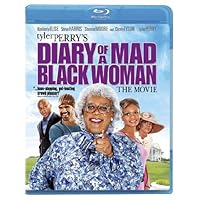
Diary of a Mad Black Woman: The Movie (2005)

Diary of a Mad Black Woman: The MovieI went to see this movie the first weekend that it came out, and I wasn't disappointed at all; I saw the original play, and wasn't greatly impressed with it, but seeing the movie, I enjoyed it very well. Kimberly Elise and Shemar Moore gave great performances; Of course, Tyler Perry playing three roles simultaneously was just as good and I applaud him; Cicely Tyson, of course, gave a gem of a performance helping her daughter become more stronger even though she herself has been wronged; I have heard the good and the bad about this movie; I have heard that Madea is just another stereotypical role model that we need to get away from; But let's be honest, how many of us can attest to a Madea in our family? or at least pieces of such a woman? This was one movie that sex and profanity wasn't splashed forward and yet, the critics bashed it; Yet, I found it a good movie, and can all of us who supported Mr Perry opening weekend be wrong? I don't think so; Look forward to the DVD.

I applaud the earlier reviewer, Ramsess Gray from Fayetteville, NC. Thank you for standing up to all the other so-called critics who trashed this movie. I thought this was an excellent movie from beginning to end. In his big-screen debut, Tyler Perry delivered big-time, no questions asked. Darren Grant, Mr. Perry, Kimberly Elise, Shemar Moore and the rest of the cast were second-to-none in my opinion. I loved each of the characters Mr. Perry played himself, especially gun-toting Grandma. She was funny & very entertaining throughout. As far as best picture and/or any awards are concerned, I think Mr. Perry should have as good a chance as anyone to win an award in some category(ies). Also, in my opinion, Kimberly Elise should win something for her role. And for that matter so should Darren Grant & Shemar Moore. But that's only my opinion. The movie was very entertaining and it had all the qualities you could ask for in a movie. It made you laugh. It made you cry. It made you happy. It made you sad & it made you proud, all in about 2 hours time. I'm sure this movie is not and will not be for everyone. We all have different tastes. All I can really say is "watch the movie for what it is", and that's entertainment at it's best.

Larry

Buy Diary of a Mad Black Woman: The Movie (2005) Now

literally rolling in the aisles at time! i had no intention of renting or buying this dvd until my neighbors were raving about it, plus all these grest customer reviews here at amazon.com! finally i said ok, let's have a look. was i ever glad i did too!yhe cast is impeccable, the script hilarious, everything about this film worked out just fine! the film is a complete head trip from start to great finish! all the acting is superb, the dvd transfer is gorgeous, and the gospel score sounded magnificent as well! do treat yourself to this one as it will blow you away. happy 4th to all, and happier 'diary of a mad black woman' viewing pleasure to everyone out there! it really is one fine film.

Read Best Reviews of Diary of a Mad Black Woman: The Movie (2005) Here

i saw the movie version first & so was pleasantly surprised to discover that the two versions were handled SO differently -so much so that they are BOTH worth seeing & (in my opinion) owning. there are some different characters in each & some of the situations are handled differently, but the overall story remains the same &, of course, madea is HYSTERICAL no matter where she goes! :D i also enjoyed the father character in the play version a lot better than the movie version's joe (joe was a little too real-life disgusting for me -i was having flashbacks to someone i know in real life! =:O) & i LOVED the strong-in-the-Lord singing mom, ESPECIALLY when she sings that song about rebuking the devil -you GO girl! i also enjoyed the fact that there seemed to be a little more Jesus in the play version -the movie version seemed to have more of that "sanitized" hollywood feel? i.e. cleansed of explicit references to God, Jesus & the Bible -which i don't blame mr. perry for & i praise God that he's getting his plays made into movies & reaching a wider audience with the Message \o/ -you GO dude!

Want Diary of a Mad Black Woman: The Movie (2005) Discount?

I saw the movie before I got this play. If you have seen the movie you need to see this as well. Other than the songs being too long, it was great. Please don't go in with the mind set of it being like the movie because it is not. Some of the characters are different. So of course the outcome is different. Daddy Charles was a good character choice addition to the play. You will laugh. This play if definitely funny.And it gives you something to think about.

Save 27% Off

Wednesday, August 20, 2014

Primal Fear (Hard Evidence Edition) (1996)

Primal FearThe archbishop of Chicago has just been brutally murdered and 19-year old altar boy Aaron Stampler (Edward Norton) is found running from the scene, covered in the man's blood. It looks like an open and shut case against the simple, stuttering boy, until dashing Martin Vail (Richard Gere), a self-proclaimed "big-deal lawyer," offers to defend him pro bono. The prosecutor he'll be facing in the courtroom is none other than his ex-girlfriend (Laura Linney), who is still bitter about their past. With the help of a psychologist (Frances McDormand), Vail discovers a shocking secret about young Aaron that may save his life.

This is a great movie; I've seen it many times and it never gets old. Gere is perfectly cast as the handsome and confident charmer, and Edward Norton surely had one of his best roles ever as Aaron and this was his first movie role. He is so charismatic that you will not be able to take your eyes off him. The search for the killer's motive is intense and surprising, with lots of opportunities for Gere to showcase his tremendous appeal. Highly recommended for those who like character-driven mysteries.

When I had first laid eyes on Primal Fear on pay-per-view years ago I had first dismissed at as another Hollywood who-done-it courtroom drama with no originality. And was I ever wrong. Primal Fear may seem like something you've seen before, but the clever, highly intelligent, and twisting script makes the film soar to unexpected heights, and Edward Norton's breakout performace as murder suspect Aaron has to be seen to be believed (Norton would receive a Golden Globe and his first Oscar Nomination for Best Supporting Actor which Cuba Gooding Jr. ended up winning for Jerry Maguire). Richard Gere has the starring role playing Norton's lawyer who seems to be the only one who believes Norton's innocence. With a super twist ending and a superb all star cast which includes Laura Linney, Frances McDormand, Steve Bauer, John Mahoney, Maura Tierney, and Andre Braugher, Primal Fear is a near superb little gem that I strongly suggest seeing.

Buy Primal Fear (Hard Evidence Edition) (1996) Now

"I don't have to believe you. I don't care if you are innocent. I'm your mother, your father, your priest." This is what defense attorney Martin Vale (Richard Gere) tells his client, Aaron Stampler (Ed Norton), as they are preparing to defend him against charges of killing the Archbishop of Chicago.

Of course, later, Marty says: "I believe in the notion that people are innocent until proven guilty. I believe in that notion because I choose to believe in the basic goodness of people. I choose to believe that not all crimes are committed by bad people. And I try to understand that some very, very good people do some very bad things."

So--which one is true? Nobody is quite what they seem in this legal procedural that will keep you in your seat and your finger away from the 'Pause' button for its entire 2 plus hours' duration.

First, you see the kindly Archbishop attended by a heavenly choir at a charity function. The city loves him. But, is his public face the same one he wears when he's all by himself with the altar boys?

Did bumbling, stuttering Aaron kill the Archbishop. Nobody really wants to believe it.

Does Janet (Laura Linney) truly tow the company line as the assistant prosecutor? Well, and is she truly no longer interested in Marty?

The plot's got more twists than a pretzel factory. I no sooner thought I knew what was going on or what someone was going to to when they changed it on me.

"Primal Fear" is one of the best written and acted courtroom dramas I've seen. My only question to myself is why the heck did I wait this long?

Read Best Reviews of Primal Fear (Hard Evidence Edition) (1996) Here

Usually, I stay away from courtroom dramas because they're the same thing over and over, but this one truly is different. The story may seem a little familiar if you've seen films of this nature before, but I can guarantee that as you continue to watch it, you'll see how well this movie rises above the rest.

Making his first major debut, Edward Norton is nothing short if terrific in the role of Aaron. He was robbed of the Oscar for doing the great job that he did throughout. Richard Gere has never given a truly bad performance, but he does go a step above his usually sleepy-looking acting style by showing some good raw emotion. Andre Braugher has always been a great actor and will continue to be a great actor, and Laura Linney shows that she's always been a fine actress (nevermind the miserable CONGO). The direction by Gregory Hoblit is great and fast-paced and I recommend that you take a look at Hoblit's FALLEN if you liked this film.

I cannot rave enough about the acting here, so I'll just stop now, but first I have to end by saying that throughout this slick film, it never gets bogged down in pretentiousness, as many courtroom thrillers do. You'll love this film all the way up until the true shocker of an ending.

Want Primal Fear (Hard Evidence Edition) (1996) Discount?

"Fui bailar no meu batel alem do mar cruel," sings modern fadista Dulce Pontes in this movie's dynamic title song: "I went dancing in my boat, there on the cruel sea." And it must be just like a nutshell-sized boat dancing on a stormy ocean's waves that nineteen-year-old Aaron Stampler (Edward Norton) feels after his arrest for the savage murder of Chicago's saintly Archbishop Rushman. Or does it?

Certainly it doesn't help that Aaron was caught running from the crime scene, covered in blood, and with the archbishop's ring in his pocket. Besides, who is going to believe him anyway a stuttering, uneducated boy from rural Kentucky who was found begging by the powerful clergyman, taken in as an altar boy and made to sing in his choir that he was present when the murder was committed but can't remember a single thing because he blacked out? Nobody; surely not the police and ADA Janet Venable (Laura Linney), assigned by D.A./Rushman friend Shaughnessy (John Mahoney) personally to try the case, with the express mandate to obtain a death penalty conviction. Nobody, that is, except Aaron's defense attorney Martin Vail (Richard Gere). Vail, of all people: the flamboyant ADA-turned-private-practitioner, the star attorney not shying away from even the shadiest client, to whom TV and magazine cover interviews are as second nature as his courtroom appearances, and who cynically quotes as his mottos a professor's maxims on his first day in law school: "From this day forward, if your mother says she loves you, get a second opinion." And: "If you want justice, go to a whorehouse. If you want to get f**ked, go to court."

"Primal Fear" was adapted from William Diehl's like-named bestselling novel and, like in many literary adaptations, its screenplay is a hit-and-miss affair. Not successful, in my view, are those alterations that unnecessarily make Vail an even more ethically questionable lawyer as already conceived by Diehl; such as the way he becomes Stampler's attorney in the first place (which in the movie amounts to blatant client solicitation; not to mention that no sane lawyer would introduce himself to a potential client with the words "I'm what you call a 'big shot' attorney"), and the circumstances surrounding the discovery of a tape revealing the archbishop's not-so-nice private side (which in the novel isn't found by Vail but by his investigator Tommy Goodman [Andre Braugher]: of course that doesn't eliminate Vail's ultimate ethical responsibility, but contrarily to the movie, at least he doesn't "borrow" the tape from the crime scene himself, and he doesn't know in advance what Tommy is up to). Further, in the book the tape is not shown in open court and immediately introduced into evidence but viewed in the presence of only the judge and the attorneys, which given its contents seems more realistic (even if it were later introduced into evidence after all). On the other hand, particularly regarding the main characters the movie's alterations work well: Unethical or not, Richard Gere's Martin Vail is even more interesting than the character devised by Diehl; moreover, an unnecessarily cliched, ultraconservative judge nicknamed "Hangin'" Harry Shoat becomes an although still tough overall more multidimensional Judge Miriam Shoat (Alfre Woodard); similarly, Vail's mafia-affiliated client Joey Pinero (Steven Bauer) gains considerably in stature; and although it actually reinforces cliche to shift the love/sex relationship from the book's present one between Vail and psychiatrist Dr. Arrington (Frances McDormand) to the screenplay's past one between Vail and Venable (which the ADA now derogatorily calls "a one-night-stand [that] lasted six months"), thanks to Gere's and Linney's considerable on-screen chemistry their characters' personal relationship adds sparks and tension to their professional rivalry that also lend greater credibility to the final courtroom scene's powder-keg explosion.

Outstanding as all of its actors are, however, "Primal Fear" rises and falls with the performance of Edward Norton, and it is his breathtaking achievement that validates the movie more than anything. Then-newcomer Norton not only had to portray a boy almost a decade younger than himself (which he manages flawlessly) but also an incredibly complex character, sometimes shifting behavioral patterns, accents and manners of speech from one sentence to the next; and he delivers supremely, deservedly garnering an Oscar nomination (which in a year of extremely tight competition he lost to Cuba Gooding Jr. for "Jerry Maguire"), as well as a Golden Globe and several other awards, and together with his roles in "People vs. Larry Flynt" and Woody Allen's "Everybody Says I Love You" playing himself into public awareness once and, hopefully, for all.

Although "Primal Fear" is often cited for its final plot twist, anybody who has seen more than that occasional thriller can see its end coming somewhere halfway through the narrative (and I think that's true for both book and film although I admit I hadn't read the novel when I first saw the movie). Moreover, the final twist depends on a feat on the part of Norton's character that lawyers and psychiatrists alike will find hard to take at face value. Thus, at first viewing this movie's end may appear a bit of a let-down. But trust me: The story grows on you the more often you watch it, and in my view it actually helps to know the end, because not only does this enable you to see the many nuances you necessarily missed the first time around; it also frees you to think about the moral issues addressed. For those reasons, and for the entire cast's first and foremost Edward Norton's fine performances, this has long become one of my favorite courtroom thrillers.

"[I believe that] things are not always as they appear, that sometimes facts can be manipulated the way a magician manipulates an audience. He distracts you with this hand, while the other hand does the tricks. It's called misdirection." "Primal Fear," preface: from Martin Vail's summation in a case entitled "The State vs. Nicholas Luma."

Also recommended:

Primal Fear

Presumed Innocent

The Burden of Proof

The King of Torts

Sleepers

Mystic River (Three-Disc Collector's Edition)

Lagrimas

Save 29% Off

Monday, August 18, 2014

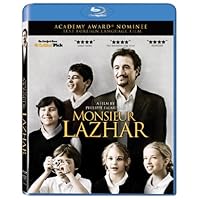
Monsieur Lazhar (2012)

Monsieur LazharHow is a class of eleven/twelve-year olds to cope with a tragedy that suddenly and out of the blue takes away their teacher? How do parents and teachers react to the trauma the children are experiencing? The school principal is under pressure to keep things "normal", none of the other teachers can take on the class, one school councillor is designated for the class of twenty plus young minds a crisis of great proportion... Into this challenging scenario walks Bashir Lazhar and offers himself as the ideal replacement teacher. With great subtlety and compassion does the film, Monsieur Lazhar, explore the evolving relationships between teacher and students, among various teachers and last but not least, between Bashir Lazhar at the school and his personal struggles beyond. While set in Montreal, Quebec, the messages of the film are nor locality specific, and could happen anywhere. The story touches on the different ways of dealing with loss and guilt, with honesty, lies and pretense, with prejudice and expediency. And finally, how the coping mechanisms of adults cannot easily be transferred to those of children living through a crisis. The story concentrates on two of the children, Simon and Alice, their growing hostility and Bashir's strict yet sensitive methods in dealing with the emotional struggles that the children go through.

Mohamed Fellag's acting in the role of Monsieur Lazhar is excellent, his interpretation of his character utterly convincing in his unassuming and often understated acting. The child actors, especially the two interpreting Simon and Alice, come across as natural and genuine. Philippe Falardeau, the film's Canadian writer/director came to international attention last year with his film "Incendies" that, like Monsieur Lazhar this year, was nominated for the Academy Award for best foreign-language film. [Friederike Knabe]

There is no shortage of good French language films about children and their teacher(s). Though this one is set in Montreal, it has many of the endearing qualities that French directors bring to their portrayal of the interaction between children and adults.

What makes this film excellent is its overall tone. It's touching, it's heartwarming and ultimately sad, but in an almost uplifting way. The acting the children is flawless.

And while the subject matter of death is at the core of the film, it is enveloped in a

feeling of awe and detachment at how the kids deal with it, and themselves, and a humanistic

portrayal of the teacher who has to take on the class following the suicide of their previous teacher. The teacher himself though has his own understated but real demons to cope with. But the heart of the film, including most of its scenes, take place in a classroom.

Technically, the film has a near perfect touch. Scenes end when "they should" instead of being drawn out for unneeded effect (and the ending included), histrionics are absent, and it flows like a calm stream with potentially turbulent undertones. It's a film ultimately about life, love, respect, hope and endurance.

It's a film you'll enjoy owning so that it can be viewed on multiple occasions. And being a foreign film, you can bet that most of your friends and family haven't seen it.

Buy Monsieur Lazhar (2012) Now

And I don't throw that word around. Everything about this film is exquisite: the story, cinematography, editing, pertinence, depth, character development, acting, soundtrack -and the French (my second language) is pristine. I don't recall breathing while watching it in the theatre, but I must have. The popcorn went untouched. I can hardly wait for the DVD!

Read Best Reviews of Monsieur Lazhar (2012) Here

A replacement teacher and his students help each other come to terms with tragedies in their lives. Compassionate, thoughtful, often very funny.

Recognizes that a modern classroom with its heavily regulated behavior can be an environment hostile to compassion and connection and addresses that both as a part of the inciting tragedy and as an obstacle to dealing with it.

Want Monsieur Lazhar (2012) Discount?

I'm sure I can't improve on the review that originally brought this Quebecois film to my attention. Je vous remercie profondément, Madame Knabe! Was "Monsieur Lazhar" nominated for Best Foreign Language Film for 2012 or 2011? In either case, it deserved to win just as much as whichever motion picture captured that condescending prize, including even Michael Haneke's intense "Amour." The acting is wonderfully well attuned, both from the adult teachers and from the students in a Montreal public school distraught over a well-loved teacher's suicide in her own classroom. The dynamics of faculty relations in the small school are perfectly convincing, which is not often the case in films. [I taught art and music in a grade school for two anxious semesters, by the way, decades ago at the beginning of my adult life.] As is so predictable, the brightest children are both more perceptive and more vulnerable than their teachers. It must be scary to confront such a realization for the first time as a beginning teacher. The title character, Monsieur Lazhar, has more immediate reasons to be scared, however. Only his gentle, humane decency carries him through.

Save 43% Off

Monday, July 21, 2014

Arthur / Arthur 2: On the Rocks (2-Movie Collection) (2011)

Arthur / Arthur 2: On the RocksFor the price this is definately worth it. It comes on 2 discs in one case, a must have for comedy fans like me. Dudley Moore is at his best in these to classic 80's comedy hits. This is a plus considering that it's on 2 discs and not on the single 2 sided disc that seems to get scratched all the time and you have to decide which side of the disc you want to keep in good mint condition.

This (Arthur)being a favorite from years gone by, was excited to see it ON BLU-RAY, and 'WIDESCREEN'! Yippee, until I started to watch it. I then compared it to my old "full frame" copy (blu and reg dvd machines, comparing back and forth). Funny what they consider widescreen now days. My original says "formatted to fit your screen". I beg to differ, but the newer "W/S" is. Case in point, I froze the screen at 1 min. 18 sec on both copies, the scene where the streetwalkers are standing in front of a store/restaurant. The full screen has so much more image than the newer wide: the signage is more complete top and bottom, as well as the characters' lower bodies. Left and right also has more picture. It's as if a w/s matte (rectangular shape) was placed over the full screen image, to create a "widescreen" image. Sorry, but I am not impressed. The blu picture (what image they left of it) IS of a brighter nature, and the signage in this particular scene IS now clear to read. The original dvd picture had looked like this scene was filmed in shadows, but the newer (smaller) image is clearer to make out. I have not watched entire film yet, perhaps update later. I, for one, do not mind side bars, if the original screen image is left intact. Still a fan of film, but am increasingly disgusted with modern film marketing tactics. (footnote: this film does not really 'need' to be widescreen, and newer fans will likely not know what they're missing with newer version. Is still head and shoulders above the dreck remake, but I'm an old guy, so what do I know!) UPDATE (4/20/11): Confusion and consternation abound! Comparing a later scene (office receptionist), w/s has more image to the right side of screen, but is cut-off at the bottom, from full screen! Oye! BOTTOM LINE: film is a hoot, in any format (Sir John Gielgud richly deserved his Oscar). The 1.0 audio is ok for a dialogue driven film, but at least stereo would have been nice. Blu-ray has audio dubs in German, French, Spanish; subtitles same, plus English. My opinion, film: 5 stars, blu video: 4 stars (cleaned up, but not 'eye-popping': it's an older film!), and 3 stars for overall blu-ray release (pluses for language options, picture improvement; negatives for 1.0 audio, zero extras, and weird formatting.) Bonus update #2: Finally watched A2. UGH! I lost count of how many none-too-subtle references/rip-offs to original film there are, and the delightfully scripted/acted original characters (Linda's Dad, A's grandmom, Burt Johnson) are dreadfully treated in #2. Almost tarnished my enjoyment of original (file under "What Were They Thinking?").

Buy Arthur / Arthur 2: On the Rocks (2-Movie Collection) (2011) Now

So i've always been a Dudley Moore fan, and I wanted to buy the classic Arthur before that idiot Russell Brand screws up the franchise by polluting it with vulgar humour and sleazy sex jokes (at least more vulgar and sleazy than the original). Dudley Moore just brings a level of class and sophistication and even sympathy to everyone's favorite drunken playboy!

Read Best Reviews of Arthur / Arthur 2: On the Rocks (2-Movie Collection) (2011) Here

'Arthur' is a true classic. After Dudley Moore's star rose , starting with 'Foul Play' and continuing with the great '10', 'Arthur' is a film with an almost perfect script, casting, music, production design and direction. It succeeds in pulling your heart strings and stands up as well today as it ever did, maybe even more so. 'Arthur 2On The Rocks' , while enjoyable, is an anemic squeal at best but at times succeeds in capturing some small glimpses of it's predecessors genius and warmth.

With that said, this review will focus on the actual video and sound quality rather than the film itself so you the reader can decide whether this Blu Ray disc is a good upgrade from your standard VHS or DVD versions.

This release of both the original 1981 'Arthur' and it's 1988 sequel 'Arthur 2-On The Rocks' is presented on one 50GB BD housed in yet another el-cheapo "eco case" with no real artwork on the disc itself other than the film's titles. No extras other than the original film trailers are included.

So how does 'Arthur' fare on Blu ray? Is it worth your hard earned cash and what should you expect? This movie is one of my all time favorites and I have to admit to being disappointed somewhat in this BD presentation.

For starters, both films have been cropped slightly from their original aspect ratios to fill our HDTV screens. It is nothing too drastic but I always prefer seeing films the way they were shot, not minding a bit of black border here and there.

Bottom line is this: For now, this is the BEST 'Arthur' has looked (or probably ever WILL look) on home video. Nevertheless, the original film sports a slightly troubled transfer. With a relative low bit rate and an apparent lack of caring on the Blu Ray authors part, 'Arthur' has trouble with both image stability (telecine wobble) and contrast issues, namely some major blooming with bright light sources. The wobble is nothing that should worry the casual viewer, but videophiles will notice it each time it happens. Check out the headlights on Arthur's limo as it is parked in front of the restaurant he has taken "Princess Gloria" to. The limo is parked, but the lights keep shifting position. And notice the massive blooming from any indoor scene that includes outside windows. YIKES! My display is properly calibrated so what you see is what you get here.

Fine detail is frequently obscured by something appearing to be an overzealous application of DNR, but it doesn't introduce any other negative artifacts into the picture such as smearing or blurring. It is obvious to me that this film was basically run thru the scanner set on "Auto" and no human being sat and watched the finished results because the blooming alone would have been reason enough to ADJUST the relative Bright/Contrast levels for a much better and pleasing result. As it is, at times the transfer looks pretty darn good (Arthur, Hobson and Linda at the City bus stop is a good example) and alternately pretty bad (Arthur in his father's office whenever the outside window is in the frame)

On the positive side, the colors are solid and the color timing is beautiful.

'Arthur 2On The Rocks' fares much better picture wise. The image is stable, the contrast levels are much better, for both day and night scenes and the color timing mimics that of the previous release.

If you LOVE the original 'Arthur' like I do, while being slightly disappointed with the original films treatment from this rather shoddy transfer, you will have to admit it is the best it has ever looked in your living room or home theater. If only it could have been brought up to the visual level of the 2nd film, I would have nothing to complain about regarding the picture quality.

How about the sound? 'Arthur' is presented in it's original mono, albeit in uncompressed DTS-HD Master Audio. While not demo material for your surround system, the sound is good with nice, crisp dialogue and decent sounding music. The audio is actually better than the visual. On the other hand with 'Arthur 2' , the picture is much better but the audio is NOT. In fact if you watch and listen carefully you will notice the entire first reel of 'Arthur-2' has been 'looped' in post production and sounds like it is coming out of a cardboard tube. This improves as the film progresses and the sound on this one is at least presented in it's original stereo mix and again using DTS-HD.

Even with a less than stellar transfer and shoddy sound on the 2nd film I still have given this product FIVE STARS and the reason is because of the content (2 films with one being a classic) and because of the current very low asking price.

To sum it up, if you are a fan of this film or it's sequel, then this purchase is a must have and should be a no brainer. While this is far from the ideal presentation and falls somewhat short of my expectations and what could have been achieved with even the slightest amount of human involvement in this transfer, it is pleasure to finally watch and enjoy 'Arthur' in High Definition.

Recommended for fans and the curious alike, just don't get your hopes up too high for a great transfer as it isn't there.

Want Arthur / Arthur 2: On the Rocks (2-Movie Collection) (2011) Discount?

It was a good deal for the money (two films on Blu-Ray for under $15). I watched the first movie and didn't feel ripped off like I did watching some other Blu-Rays (First Blood and Total Recall), but was not impressed. The video quality was okay, but not great (I suspect better than a standard DVD). There was little or no grain, but it just did not look that great. But, it was okay for a movie that old, and at that price. The audio was "DTS-HD Master Audio", but was in MONO! What is the point of that?

I put in the second movie (Arthur 2) and immediately noticed grain. I didn't think it looked as good as the first movie. I skipped through it, and there was grain throughout the movie. But still, probably better than a standard DVD, which I have never seen. Grain just bothers me. I don't think you should see it on a Blu-Ray disc. The second movie had stereo sound at least, which was still a disappointment, but better than the original Arthur (first movie).

Still a good deal at this price, unless you are a big fan of the "Arthur" movies.

Save 30% Off

Tuesday, July 15, 2014

The Lucky One (Movie only+UltraViolet Digital Copy) (2012)

The Lucky OneAs a writer and philosopher, this movie in particular just blew me away. The first time I saw the previews for it, I remember thinking that it seemed to have an interesting quality to it which appealed to both my intellectual trades mentioned above. The first time I saw it, I was just blown away, as have I been in the three other times I've gone to see it.

Logan Thibault (Zac Efron) comes off as being the kind of character who you can really learn a lot from in terms of lust plain old life experiences in general. What other people brand as being 'mushy' or 'cheesy' I see as being the truth towards understanding how no matter what hand of cards you're dealt in your life, there is always hope. All you got to to is go and find it. Logan finds himself in this situation while on deployment in the Middle East, where a single, split second decision to pick up a photo amidst a pile of rubble undoubtedly comes to change the course of his entire life. After coming to the realization that finding that photo truly spared his life, along with knowing so many others were not so lucky, he finds himself obliged and determined to find the girl in the photo and thank her.

After a brief stay with his sister in Colorado, he sets off on foot to find this girl. His search takes him to a small town in Louisiana where once meeting her, his initial goal of thanking her is derailed as he suddenly finds himself falling in love with her, as well as growing to be very fond of both her eight-year-old son and her feisty grandmother. One thing in particular that I admired greatly about Logan's character is that he never once detered or swayed when it came to helping someone else in need, or standing beside them when they needed support. This is shown in the film when he rises to support Beth when she is grieving over the loss of her brother as well as amidst the conflict with her abusive ex-husband. At the same time, his imperfections are conveyed through his struggle to come clean with the true reason for which he intended to find Beth.

Out of everything, the most prominent element of Logan's character which resonated in my mind is the level of humility present in his character. He's not afraid to see things as they really are in his life, and tries his best to change what he can. Even when confronting Beth over the matter of Derek's picture, he makes his best effort to address the situation as honestly as he can, even when it could mean losing Beth and her family forever. Probably the most shining moment of the movie comes at the end, after Logan explains to Beth the details of her brother's death which she has wanted to know since his death, when the sum of all of Logan's actions come together to reward him in the form of Beth saying to him, "You belong here."

I know this as a fact, from personal experience, to be one of life's greatest lessons, and some people's inability to understand it is to be expected, as people are not perfect. That just makes the experiences of those who do even more culturally prominent, because passing that lesson on to another person is undoubtedly the most remarkable gift one person can give to another. Therefore, I raise my glass to Sparks, Efron and all those involved and say,

"Well done, my friends. Well done."

I have this subversive image of Nicholas Sparks in a wifebeater at the computer, angrily pounding the keyboards and listening to death metal while a burly biker gives him a tat. Because a guy can't be that wholesome and sensitive, can he? Except that, like clockwork, Sparks' bestselling novels keep getting made into films. THE LUCKY ONE is merely the latest adaptation.

This is Hollywood, babe, so we shouldn't harp on them heaps of uncanny coincidences. Such as these: In Iraq, the morning after a harrowing exchange of gunfire with the enemy, U.S. Marine Sergeant Logan Thibault (Zac Efron) gets off his duff and picks up a photo he glimpses lying in the rubble. Suddenly, there's an explosion right where he had been sitting, and that's when the notion probably first struck him that the photo is some sort of lucky charm. Eight months later, Logan's third tour of duty ends and he's going home, that photo still tucked away in his keeping. Logan regards the mysterious girl in the photo as his guardian angel, someone who'd kept him safe and breathing. He wants to find her and thank her. But he doesn't know who she is.

Back home, Logan Thibault is unable to settle down, and off he goes with his dog, walking, just walking. In his wanderings, he crosses several states and eventually ends up at a family-run dog kennel in Louisiana. See, he'd never stopped trying to look for that girl in the photo. By pure happenstance, the girl in question, whose name is Beth (Taylor Schilling), runs the kennel and she assumes that Logan has shown up looking for work. And because the plot demands it, Logan rides with the deception.

The kennel is this run-down establishment, and Logan quickly makes himself useful, never mind Beth's bitter ex-husband's assertion that he may be a "crazy drifter." It shouldn't surprise viewers that THE LUCKY ONE follows the patented Nicholas Sparks formula. The film, lushly romantic and graced with evocative cinematography, reminds me quite a bit, in terms of tone and sheer escapism, of A Walk in the Clouds. Of course, it makes more sense for Logan to right away inform Beth of why he's really there. But where would the movie be? Taylor Schilling is sweet and appealing, playing a young single mom raising a child while fending off the unwanted affections of her influential ex-husband (who is this bullying deputy sheriff). Beth nurses her own grief. She's yet to come to terms with her brother's death during the war. Logan's military past upsets her and prejudices her against him. Plus, he seems to be everywhere she's at. It's irritating. We all know where this is going. But Nicholas Sparks, with his sweaty wifebeater shirt and his deep aversion to sunlight, is adept at manipulating his audience.

Zac Efron surprises me. It's evident that those HIGH SCHOOL MUSICAL pictures are increasingly dimming in the rear view. A friend recommended CHARLIE ST. CLOUD to me a while ago, and I laughed at her with the smug convinction of someone who views Zac Efron as someone who belongs strictly in the teeny bopper crowd. But Efron demonstrates reserve and maturity in his portrayal of a troubled jarhead desperate for solace. He plays Logan as a man of serious humor but with hidden depths. I liked him. Blythe Danner comes in as Schilling's wise grandmother. Danner, naturally, exhibits that infallible knack for sensing the right man for her hurting granddaughter. I long for a grandmother like Danner. It surely would save time and effort on them online dating services.

A manly man like me can readily admit that he's a romantic cuss. I enjoyed THE LUCKY ONE quite a bit. Nothing in the story surprised me. I looked each plot swerve (not many) squarely in the eye. But Efron and Schilling invest in their characters, and they effortlessly pull the viewer in. It helps that the little boy is likable. There's a stillness and thoughtfulness to the film which I appreciated. It doesn't indulge in too many grand gestures, although, okay, the climactic sequence is pretty melodramatic. The movie accomplishes that ultimate flattery: It made me want to read the book. Yeah, Nicholas Sparks, in his wifebeater shirt, knows what he's doing. Even if he drinks human blood.

Buy The Lucky One (Movie only+UltraViolet Digital Copy) (2012) Now

Being the only male in the audience on a Friday afternoon, pretty much tells you what you are getting with "The Lucky One". As the lights came up as the credits rolled, I turned around to see myself standing among fifteen to twenty women, some were teared up, some weren't. Nicholas Sparks, the writer of the novel, has made a career off of books and movies that touch people's hearts. The biggest of those was "The Notebook", but "A Walk to Remember" & "Message in a Bottle" were notable as well.

While most of Spark's novels are tailor made for women, I found "The Notebook" to be something that everything could relate to with its theme of Alzheimer's. "The Lucky One" on the other hand, had many opportunities to reach a broader audience but brush stroked over those. I enjoyed "The Lucky One", but for some reason, it didn't quite affect me like "The Notebook" did. That may be because it didn't spend enough time in certain areas.

First of all, Zac Effron (High School Musical, 17 Again) plays Logan, a survivor of Iraqi freedom who stumbles upon a picture of Beth (Taylor Schilling) lying in a pile of rocks after a night raid. All we learn about Logan happens in the length of the opening credits. The problem with "The Lucky One" may just have been that the characters were all too interesting. There is depth to the characters, but the montages that are used to get all the information across are empty and unexplored. Sparks also did a movie called "Dear John" that had so many montages, I thought I was watching a two-hour commercial for Hallmark. I hate montages.

In the first four minutes of the film, we see Logan survive some war situations, see him return home with a picture that saved his life and see that he has a lot of post-traumatic stress. All of which is very interesting, but it happens in a montage and we lose all the emotion from it. Once the movie gets going though, to its credit, we start to see some real emotions coming out, especially from Schilling's character. She does an outstanding job portraying her sadness and her struggles as a single mother dealing with a lot of issues. Effron, on the other hand, is stuck playing a character that had his best parts portrayed in montage and for the rest of the movie, plays the perfect man. What else would you expect?

"The Lucky One" is just an okay movie that gives everybody that enjoys these type movies exactly what they're looking for. It has two beautiful people falling in love. It has drama. It has beautiful cinematography. It has all the cliché' things that make a movie like this safe from criticism and just outside the realm of memorable. As rich as the characters were, I just wish some of those character traits would have been fleshed out more.

Read Best Reviews of The Lucky One (Movie only+UltraViolet Digital Copy) (2012) Here

I loved this movie. The acting was so good. Zac and Tayor did a superb job. My husband liked this movie as well.

The story flowed from beginning to end. You will love it.

Want The Lucky One (Movie only+UltraViolet Digital Copy) (2012) Discount?

This is an Improbable chick flick. Logan (Zac Efron) didn't die in Iraq, like most of his unit. He credits a picture of a blond he found in the rubble for his survival. When he returns home, he is a bit jumpy and decides to walk from Colorado to Louisiana to locate the girl(Taylor Schilling) in the picture. As it turns out, she, Beth, runs a kennel and before he can say anything to her, he is hired by "grandmother" (Blythe Danner) to be a helping hand. She has taken a shine to Logan while Beth thinks he is crazy. Beth also has a son (Riley Thomas Stewart). She has trouble dealing with the death of her brother in Iraq, who she feels died for no reason. The local sheriff (Jay R. Ferguson) is the father of Beth's child and he has some testosterone problems. The sheriff is more how young men really are: jealous, controlling, manipulative. Logan is how women want them to be.

My "chick flick" detector went off when I saw the movie poster. You wait for him to tell her about the photo...which would have been better if she said, "That's not me, you have the wrong girl." At which point he packs up and leaves, but they opted not to do it my way. This is a romance novel brought to the screen. The man is handsome, fit, intelligent, understanding, a good father, musically inclined, dances, fixes things up around the house, no vices, and a knight who protects his lady...not to mention the final soul mate connection. It hurt my brain to watch it, but the women seemed to love this fantasy.

The film was well made and acted. Good music score. But it wasn't my cup of tea. I will go 4 stars based on other people's reaction and not my own. If you love romance novels, this is your book come to life.

No f-bombs, no nudity, some love scenes. Is Zac Efron the new Fabio?

Save 25% Off

Wednesday, June 18, 2014

The King's Speech (2010)

The King's SpeechThere always seems to come a time in every British actors career where they must play the role of a historical British monarch. Riding on the success of his career defining performance in "A Single Man" and sampling the glory of Best Actor nominations across the award circuits, Colin Firth comes storming back with another film, determined, this time, to take the all the prizes with him too. But is "The King's Speech" worth its pre-Oscar hype?

Set across the years between the First and Second World War, "The King's Speech" concentrates on the rise of King George VI (Firth) and his personal woes, including his infamous stammer and disdain for public speaking. Obviously being royalty, having an ability to engage the public in moving and inspirational speeches tends to be a necessity of the job. In attempting to overcome this disability, he's entrusted in the care of the eccentric and flamboyant speech therapist, Lionel Logue (Geoffrey Rush).

Over the course of the film, the two men of distinctly different social classes come to blows but ultimately forge a friendship which will last a lifetime.

Colin Firth's portrayal of George VI (or simply Bertie to his family and friends) was a fascinating insight into the king's troubled personal life. His tragic inability to speak, both in public and to his family, was also tender and, in a way, heart-warmingly humbling.

While Firth will deservedly get the plaudits for his regal starring role, it was Geoffrey Rush's witty, genuine, off-the-wall performance as Logue which personally blew me away, with immense comic timing and inability to be overwhelmed while in the presence of his most prestigious client.

The supporting cast was littered with enough real quality to make any award body take notice, and make most audiences marvel in delight.

The graceful and articulate Helen Bonham Carter gives a honest and loving performance as the late Queen Mother, Elizabeth.

Michael Gambon is sharp and somewhat intimidating as Bertie's father, King George V. Guy Pearce is arrogantly brilliant as Firth's brother and predecessor, King Edward VIII.

While the excellent Timothy Spall shone once again, in his second portrayal as the great Winston Churchill (his first was in October's god awful stop animation, Jackboots on Whitehall). It was also a pleasure to see the classy Jennifer Ehle who starred opposite Firth in, perhaps, his most famous role as Mr Darcy in the BBC adaptation of Pride and Prejudice as Lionel's wife.

Hooper should also be credited for making a visually engaging period drama, which never once felt tired or dull on the eyes, as a lot of these quintessentially British affairs can so often become.

The film's themes are also an uplifting and enjoyable treat for all; a story of friendship between essentially a prince and a pauper, a man's journey to overcome his own personal adversaries and become the king he was born to be.

Yes we won't lie, this isn't original by any means: these are classic tried and tested formulas that transcends cinema of the ages but rarely to this level of detail and panache.

Colin Firth and Geoffrey Rush's performances make "The King's Speech" an enthralling journey which is heart-warming, humorous and genuinely sincere.

Highly recommended.

Andrew Moore

**** 1/2

THE KING'S SPEECH is one of those rare films that rely on the brilliance of the actors to bring a story/screenplay alive. But the success of this extraordinary film does not stop there. This re-telling of history as written by David Seidler and as directed with enormous sensitivity by Tom Hooper, as captured on film by cinematographer Danny Cohen glows as a background for some of the finest acting before the public today.

The film opens in 1925 as King George V (Michael Gambon) is beginning to fail, leaving the heir apparent to the throne at the time of his death to be Edward VIII (Guy Pearce), a man more concerned with love with the twice divorced Wallis Simpson (Eve Best) than he is with the Royal Lineage. Once the now senile George V dies, Edward VIII takes the throne but soon abdicates to marry Wallis. This passes the throne to the tender but severely stammering Prince Albert (Colin Firth), a man terrified of facing his beloved countrymen because of his speech defect a defect that his wife Elizabeth (Helena Bonham Carter) has encouraged him to correct through a series of speech doctors. Elizabeth hears of Australian émigré Lionel Logue (Geoffrey Rush), a poor wannabe actor who gained his knowledge for correcting speech defects teaching returning WW I victims in Australia. Prince Albert (Bertie) and Logue meet and begin therapy by Logue's tough rules before Albert takes the throne. Through a series of rigorous exercises and lessons Logue helps the Prince learn to speak, finally accompanying him to the throne as a speech therapist and giving Bertie (now known as King George VI) the courage and strength to rise to the occasion of leading England through WW II.

Though the above is a brief synopsis of the story, the real message of the film deals with the gradual building of a close friendship between Bertie and Logue or between royalty and commoner. The manner in which Colin Firth and Geoffrey Rush create this memorable relationship represents some of the finest acting in cinema history. The very large cast includes such luminaries as Claire Bloom as Queen Mary, Derek Jacobi as Archbishop Cosmo Lang, Jennifer Ehle as Logue's wife, Timothy Spall in a brilliant turn as Winston Churchill, Anthony Andrews as Stanley Baldwin, and Roger Parrott as Neville Chamberlain. Alexandre Desplat provides the original music allow heavy portions of Beethoven's 7th Symphony and Emperor Concerto (with Steven Osborne as piano soloist). This is a perfect film, well deserving to win the Oscars for every category for which it is nominated. Grady Harp, January 11

Buy The King's Speech (2010) Now

Earlier this year when I started hearing raves about "The King's Speech" on the film festival circuit, I knew it was a film for me. I have eagerly awaited its arrival for many months and, as expected, it is a dignified and well scripted effort. Intelligent, adult entertainment of this sort only hits the theaters around awards time and there is no denying that "The King's Speech" is positioning itself perfectly for the year's biggest competition. In an unusual bit of bravado, David Seidler's screenplay is fashioned as a feel good underdog story. Yes, that's right--King George VI is a plucky survivor who must overcome adversity to win the respect of his family and his nation. It's an unusual tactic, really, but I think that's why so many people are responding to "The King's Speech" in a more personal way than past stories of regal history. The film humanizes this world leader in a very identifiable way.

The plotting of "The King's Speech" is pretty straightforward and most people will know the principle story through either history or the film's advertising. Colin Firth plays King George VI who battled with a bad stutter for most of his life. Trying to stay out of the spotlight, Firth has never worried about ascending to the throne as he has an older brother (Guy Pearce) who is in line for that distinction. However, Pearce ends up being more concerned with an inappropriate romance than with ruling a nation. Firth's wife (Helena Bonham Carter), meanwhile, has contracted an unusual speech therapist (Geoffrey Rush) that breaks all the rules. Insisting on equality with the future King, Rush and Firth form a tentative friendship. But as Firth takes his place in the monarchy just as World War II is imminent, he must unite the nation with his inaugural radio speech. Guess how it goes?

Obviously, you can't beat the cast of "The King's Speech." Bonham Carter is a delight--both haughty and approachable. Rush is as solid as always and Firth is terrific. Truth be told, I personally would have given Firth last year's Oscar for "A Single Man" and Bonham Carter deserved it for "The Wings of the Dove" many years ago. They will, undoubtedly, both be in the running again this year as will Rush. Despite Rush's classification in the supporting actor category, however, don't be fooled. It is clearly a lead role! Guy Pearce is particularly amusing as an elder brother as he is about seven years younger than Firth. And I like seeing Derek Jacobi as an archbishop (amusing because Jacobi also played a famous historical stammerer in the glorious mini-series "I, Claudius").

All in all, "The King's Speech" is both witty and touching. It's a well made and literate film, one that I admired a lot. It did, however, play out exactly as you might expect with little narrative surprise. But that's a small point that is definitely overshadowed by the many great attributes present in the film. KGHarris, 12/10.

Read Best Reviews of The King's Speech (2010) Here

This isn't just another period piece or costume drama. It's a slice of history with a very real problem that many people deal with: stammering or stuttering. In this case, it's King George VI of England. He takes over after his brother abdicates the throne. George's problem is public speaking, and imagine just how hard it would have been for someone who had to make many broadcasts during his reign. He gets help from speech therapist Lionel Logue and from his loving wife as well.

Colin Firth, Geoffrey Rush, and Helena Bonham Carter are at their best here as the three main characters. The interplay between Firth and Rush is especially moving to watch. The two men end up becoming close friends, not just a king and his subject/therapist.

Excellent and highly recommended.

Want The King's Speech (2010) Discount?

The plot is simple enough. A loving but frustrated wife seeks help from a speech therapist for her husband, whose severe stammer has defied treatment by renowned specialists. The new therapist, who uses unorthodox techniques, manages not quite to turn the man into an orator for the ages, but to make him a comfortable private conversationalist and a credible public speaker.

Of course, the man will become the King of England, and his speeches will encourage and comfort a nation during an all-consuming war that shaped what it was next to become. That, perhaps, is what first packed movie houses for this small little British set piece.

And packed they should have been. This movie is a masterwork. It does take some forgivable dramatic liberties, though. When Lionel Logue first met the Duke of York, he was already more successful than the sets for his office and flat would suggest. And he worked with the Duke for more than a decade before "Bertie" became King George VI and the stakes of the game soared as the King tried to restore dignity to a crown that had been sullied by his brother's pro-Nazi shenanigans and self-indulgent involvement with Wallis Simpson.

No matter. Filmmaking just doesn't get any better. And in this one, it's all about the actors.

Colin Firth is an actor I have always liked but also found a bit disappointing in his choice of roles. He had settled into too comfortable a groove as a pompous twit whose humanity is slowly called forth by surrounding people and circumstances. True, he played some of these roles to near-perfection, such as Mr. Darcy in A&E's stupendous "Pride and Prejudice". But now I realize that God must have been using these roles to prepare Mr. Firth for this role-of-a-lifetime as King George VI. It is truly one of the finest performances I have ever seen an actor deliver on a screen.

Then there is Geoffrey Rush. As Lionel Logue, he strikes a perfect note as the Australian provincial who must force his way into a fortress of British snobbery and regal reserve to deliver his ministrations to a lonely, emotionally-abused man who is being forced onto a stage that terrifies him. Lionel Logue was a humorous, gentle humanitarian who used his fees from the British upper crust to fund his charitable work for the poor. The writers, director, and Rush take the more subtle tack of bringing these traits forward in the charming scenes where Logue stages a bit of theatrical horseplay with his sons and where he and the King press themselves against the wall to hide from a wife (played by the wonderful Jennifer Ehle) who comes home unexpectedly to find the Queen of England sitting at her dining table.

Then there is Helena Bonham-Carter who, as Queen Elizabeth, was spot on in portraying the remarkable woman who combined regality with compassionate earthiness to make her a rallying point for the British during World War II and a veritable cult figure to a later generation, who admired her heart, her humor, and, ultimately, her astonishing longevity.

I could go on, as the entire cast was beyond reproach. But I'll end now by saying just buy this movie. You'll wear it out before you tire of it.

Save 60% Off