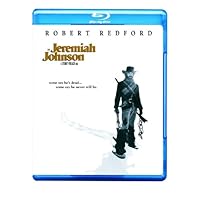
 This movie is one of several fascinating historical threads that I have been following since I first saw it as a 12-year old and loved it. First, it is based on the actual life of a mountain man named John Johnston, later changed to Johnson, and known in the West from the mid-1840s as Liver-Eating Johnson (see the book "Crow Killer" published 1958, R.W. Thorp & R. Bunker). I did not know this until recently and assumed it was all fiction. He was a huge man for his time, 6'2" and 240 pounds in his early 20's, had fists the size of baked hams and was best in hand-to-hand fighting with his 16" Bowie knife. Thorp and Bunker based the book on first-person interviews with several mountain men and others who had known of him, including, surprisingly, the famous photographer of the 1870's West, W.H. Jackson (photographer for the Hayden Expedition and famous for the first photograph of Mount of the Holy Cross near Vail, Colorado), but the real detail being furnished by an old mountain man named White-Eye Anderson, who told the story to R.W.T. in 1941 when he was in his 90's. After Johnson's Flathead wife was murdered on the Musselshell in Montana by a band of young Crow braves, Johnson "took the trail" on the entire Crow nation. His calling card, for over 20 years of butchery on the Crows, was to remove the liver of every Crow he killed and eat it. The Crows called him "Dapiek Absaroka". Vardis Fischer, on whose book this movie is based, "borrowed" as well certain scenes from a book written in the 1840's called "Life in the Far West" by George Ruxton, a first-person account of life in and near the Colorado Rockies. This movie does a fine job with a subset of Johnston's life, leaving out his service in the Civil War, and his later life as a town marshal and finally, his death in an old veterans home in Los Angeles. I got the notion that Fischer's book bordered on plagiarism after reading Ruxton, and after reading Crow Killer it seems all Fischer did was change Johnson's name to Jeremiah and slap on a cover with his name on it. The movie also leaves out that Johnson spies, among the pile of bones that was his wife outside the cabin, a round object about the size of an orange the skull of his unborn baby. He collects the bones of wife and baby and puts them in an iron pot and inters them behind carefully mortised rocks near the cabin; a shrine, his "kittle 'o bones" those closest to him called it (never in his presence) he visits over the years. Will Geer's character, near as I kin figger, is based on a friend of Johnson's named "Bear Claw" Chris Lapp, a man known to say, when presented with grizzly claws his mountain man friends collected for him to make necklaces of, "Great Jehosophat! Pocahontas and John Smith!" The Crazy Woman, one of the most sympathetic characters I have ever seen in a movie, was in real life the wife of John Morgan, a foolish homesteader on the Oregon Trail who quarreled with the wagon master and took off on his own only to be tomahawked and scalped alive by Crows, his daughter raped and scalped alive, and his two young sons killed. Mrs Morgan, having killed several of the Indians with an axe yet driven insane by the loss, lived on the Musselshell and was cared for by Johnson and his fellow mountain men for years. The movie leaves out the little detail that she and Johnson beheaded the Crow corpses and set them on stakes at each corner of the graveyard where she buried her children, the weathered skulls a powerful medicine for the Crows ever after. It was the Crow's deference to this insane white woman living in their midst that finally convinced Johnson to call off his vendetta against them, after having killed nearly 400 Crow warriors. Liver-Eating Johnson's grave (and here I borrow heavily from "Crow Killer") is in a cemetary off of Sepulveda Boulevard (interesting, that. One of Johnson's comrades was a huge black-bearded Hispanic named "Big Anton Sepulveda") in a section called San Juan Hill, row D, 2nd stone from the road reads "Jno. Johnston, Co. H, 2nd Colo. Cav.". Get the movie and enjoy it; it's a true story. Only took me 30 years to find that out.
Based on Raymond Thorp/Robert Bunker's "Crow Killer" and Vardis Fisher's "Mountain Man" and scripted by John Milius and Edward Anhalt with input from frequent Redford/Pollack cooperator David Rayfiel Sydney Pollack's and Robert Redford's 1972 movie loosely traces the mythical hunter's legend, opening with his arrival at the fort where he buys his first horse and gun. "Ride due west as the sun sets. Turn left at the Rocky Mountains," is a trader's goodnatured answer to Johnson's naive inquiry where to find "bear, beaver and other critters worth cash money when skinned." But soon he finds that his lowland skills no longer do him any good, almost starving in the freezing mountainous winter before being taken in by old "griz" hunter Bear Claw Chris Lapp (Will Geer in a stand-out role his and Redford's deadpan exchanges alone make this movie worth its price).
Setting out on his own again the following year Johnson fares better, even gaining the respect of a Crow warrior prosaically named Paints His Shirt Red (Joaquin Martinez), the first person he encountered in the mountains. After assisting a settler's wife who had to watch her family massacred by Indians (Allyn Ann McLerie) and reluctantly agreeing to take charge of her son (Josh Albee) a boy grown mute by the horrors he witnessed, whom he names Caleb he comes across white hunter Del Gue (Stefan Gierasch), buried up to his head in sand by a band of Blackfeet. Revenging that act unwittingly leaves Johnson with a wife, in exchange for bestowing the Blackfeet's ponies and guns on Flathead chief Two-Tongues-Lebeaux (Richard Angarola): the chief's daughter Swan (Delle Bolton). Although neither embraces the match enthusiastically, over time Jeremiah and Swan learn to appreciate and, eventually, love each other. But then fate strikes: Against better judgment pressured into guiding a cavalry company through Crow burial ground, Johnson finds Swan and Caleb murdered upon his return. He sets out after the Crow who invaded his home ... and plants the seeds of his myth.
"Jeremiah Johnson" was Redford's and Pollack's second of seven collaborations after 1966's "This Property is Condemned." What most obviously characterizes this movie is the breathtaking manner in which its cinematography uses Utah's mountains (doubling for the story's actual Montana setting): despite studio budgetary limits shot entirely on location, the film had Redford acting as a virtual tour guide to the magnificent Wasatch, which he had recently made his home himself.
But the movie also shows enormous restraint, particularly given its violent underlying story. There's no blood-gushing "Braveheart"-style, no dramatic score; fights are mostly one-on-one, occurring as they would in real life silently, with only the opponents' grunts being heard and despite his fearsome epithet we never actually see Johnson eat a dead Crow warrior's liver. (Reportedly a script change on which Redford insisted: wisely so.) Similarly, Johnson's and Swan's relationship builds on small symbolic gestures, moving from his coarse attempts to teach her English and refusal to learn her language to conversations in Salish (Flathead); and from her submissive expectation of his exercising his marital rights on their wedding night (which rather repulses him) to later-exchanged tender glances and smiles: Thus, we only learn about their marriage's belated consummation when one morning Swan points to his beard in response to his question about her reddish cheeks. Further, there's no dramatic conclusion; no final battle: as Johnson's myth begins to grow and he withdraws deeper and deeper into the mountains, he retraces his steps and meets in reverse order the people he encountered after his arrival: Del Gue, the settler now living in Caleb's mother's cabin, Bear Claw Chris Lapp; and finally Paints His Shirt Red who, although a Crow, created a monument in Johnson's honor and sends him off with a last salute, which Johnson reciprocates; ending the movie in an immortalizing freeze-frame shot again, a feature insisted on by Redford, doubtlessly reminiscent of "Butch and Sundance" (and repeated one way or another in several subsequent movies).
Despite its languid pace and although just under two hours long, "Jeremiah Johnson" formally takes an epic approach, complete with overture, entr'acte and narrator (uncredited, but I'm told Redford's "Brubaker"-costar Tim McIntire), whose subtle voiceovers and brief songs provide key narrative bridges. While the latter match the movie's overall style and the overture at least corresponds with Johnson's mythical stature albeit also setting up ultimately unfulfilled expectations of a dramatic finale adding an entr'acte may have been a bit much, particularly in the middle of the ride through the Crow burial ground (incidentally a screenplay addition designed to give the Indians a reason to punish Johnson and not make them appear as mindless killers). In my view this breaks the dramatic tension rather than enhancing it; problematic insofar as virtually all that remains thereafter is Johnson's gradual withdrawal into the mountains and fights with the Crow. But no matter. This is a terrific movie, featuring great banter with Johnson's fellow hunters as well as some wonderfully delicate scenes with Swan, showcasing some of North America's most dramatically beautiful scenery, and growing on you more and more the more often you watch it.
And some say he's up there still ...
"The way that you wander is the way that you choose. The day that you tarry is the day that you lose. Sunshine or thunder, a man will always wonder where the fair wind blows ..."
(Lyrics, Jeremiah Johnson's theme.)
Also recommended:
Crow Killer: The Saga of Liver-Eating Johnson (Midland Book)
Mountain Man: A Novel of Male and Female in the Early American West
The Redrock Chronicles: Saving Wild Utah (Center Books on Space, Place, and Time)
Tell Them Willie Boy Is Here
Audubon: Grizzly & Man
A River Runs Through It (Deluxe Edition)
These Rare Lands
Buy Jeremiah Johnson (2012) Now
This review is for the DVD version of "Jeremiah Johnson" released October 30, 2007.Have you ever dreamed of living in the wilderness, on your own, or being a mountain man? If so, "Jeremiah Johnson" is the movie for you; if not, the film just may change your mind. I was going to the University of Utah when "Jeremiah Johnson" was filmed, and was easily lured into reading "Crow Killer: The Saga of Liver-Eating Johnson" by Raymond W. Thorp and Robert Bunker (1958), and "Mountain Man" by Vardis Fisher (1965). Being a history major and researcher by nature, I did not stop there. I read many journal and newspaper articles, and a few rare documents that mentioned the man I learned was born in New Jersey with the name John Garrison. As much as I love Utah, I was dismayed by the fact that the real John Johnston spent most of his life in Montana, and as a resident of Montana (and someone who has lived in places where Johnston lived), I can assure you that the geography is very different. In particular, the Lolo and Flathead Valleys where the Flathead Indians lived are lush, rich, productive lands--not barren rocks and bushes as depicted in the movie. None-the-less, I went to see "Jeremiah Johnson" with an open mind--and loved the movie. Why? Because in the final analysis, "Jeremiah Johnson" has little to nothing to do with the historical figure the movie is allegedly based upon.
With this fact in mind, I suggest that you look at the Wikipedia listing and for more "factual" information about the historical John Johnston. I will address the main character of the film, the fictional Jeremiah Johnson, and the "historical" attributes portrayed in the film. As for the books, I can only say this: "Mountain Man" is a beautifully romantic fictional story, but there are better non-fiction books available. "Crow-Killer" is a comical read for anyone who knows a thing about mountain men, but is otherwise a farce.
In 1979, seven years after "Jeremiah Johnson" was released, I met John Arlee, the Native American technical adviser for the show, and an uncredited actor who played the role of the Flathead Indian that did the translating. When I met John, he was presiding over a ceremony as a Flathead medicine man. Since then, John, who is fluent in the Flathead dialect of the Salish language, has gone on to author several (educational) books and teach Salish at the Salish-Kutenai College in Pablo, Montana. His stories--which are not mine to share--about making the movie are gems, and would make a great read themselves. But John was quite proud of his part in the film, and the accuracy he brought to it concerning Flathead culture (all be it, some 10-12 hours south of where it should have been filmed). Having done little study of the Flathead or any Salish speaking group prior to working with John, I was very pleased to learn that Flathead Indian scenes of the "Jeremiah Johnson" were done as well as can be expected for a big budget film.
As time has passed, and I have learned more, I have come to appreciate the realities of the 20 year vendetta with the "Crow" Indians portrayed in "Jeremiah Johnson." [Please note that I am using the more familiar term used to refer to this nation of people, rather than their own word, "Apsáalooke"]. First and foremost, one must understand that the Crows have a matriarchal clan family social structure. As with many societies that have clan structures, offenses and accolades towards any clan member are made to the clan head. While I have found no definitive evidence that Johnston or any of the Crow clans had a vendetta with each other, there are "stories" (with limited depth) that there was some sort of "disagreement" between Johnston and one of the (Mountain) Crow clans. If such were the case, it would have played out as depicted in "Jeremiah Johnson," with individual Crow members seeking retribution for Johnson's act of killing the "war" party that killed his wife. For the Crow, there would be no logical connection between their having killed Johnson's wife (and the fictitious boy in the movie) and Johnson's killing of those men. When the Crows killed Johnson's wife, they were killing an enemy--an act of "war"; when Johnson kills the Crows--from the Crow perspective--Johnson is committing murder, not war. Thus Johnson started a "feud" with the clan(s) of those he killed.
While the language in the film may be objectionable to some, I feel that it is used sparingly and is appropriate to the attitude of the film; just as the jargon of the mountain men is used minimally, but effectively. And while I have had no experience with re-inactors of mountain men, my sense is that what little information is shown in the film (e.g., using coals to keep warm at night) are well, if not accurately, portrayed. One must remember that mountain men were for the most part people that did not give two hoots about anybody--including themselves--and lived life as they saw fit. Their customs and mannerisms were their own; everyone else be damned. And, most mountain men, contrary to what many may be believe, shared little with the "fur trappers" and explorers of the times; let alone the "settlers." Most mountain men, in fact, preferred Native Americans and their way of life, which lead to their inclusion of being labeled with the pejorative, demeaning, and insulting phrase "squaw men." ["Squaw" has a very poor etiology, with most non-Native Americans believing that it is a prototype word that was "common" to most Indian tribes for woman, while many others use the Iroquois definition: vagina (or, more correctly, an obscene reference to vagina). Hence, "squaw man" would really mean "a man who likes vagina."]
In the movie, Jeremiah Johnson is clearly a loner--and he likes it that way. Yes, he spends time trading with various Indians, but he has learned a lesson the hard way: when he helped the "low landers" find the missing wagons (I could never figure out why they knew where they were but could not get back there) his actions led him to commit fatal mistakes. First he left his wife (and the boy) alone, then he led the "search party" through sacred ground, which he himself believed was VERY wrong, and then he vented his self anger at the closest group of people he could find. Please note that the movie never makes it clear that the party of Crows he kills are the same people that killed his wife! All of these actions were contrary to those of a typical mountain man; of course building the cabin was too.
But in the final analysis, "Jeremiah Johnson" is just too good of a movie to really complain about--especially if one gets over the fact that it really has nothing to do with the historical figure, John Johnston, other than the film makers make reference to the two books as "source material." I would argue that the fact that in the end the movie was called "Jeremiah Johnson" and not "Liver-Eaten Johnson" is evidence that the film makers wanted to make a romantic film about mountain men, not a story of one man. If you have not seen "Jeremiah Johnson" you are missing one of the greatest movies ever made. It is tremendously engrossing and entertaining; but I would not recommend it for children. If you like the outdoors, "Jeremiah Johnson" will have you dreaming of your next outing.
For those of you wanting the "real" dirt--what is the difference between this version and the "cheaper" version--it is the casing that the DVD comes in! The cheap one is in the older cardboard type box, this one is in a hard plastic box. Unfortunately, the disc is still double sided (full and wide screen versions), and the "bonus" features are the same. (Yes, I have both versions.) More important to me is that any hopes of a "directors" cut seem to have been lost, since Sydney Pollack has recently passed away. The fake intro and intermission--that were not part of any of the theatrical showings I attended--had given me some hope that there might be some additional scenes, but that was not the case. I am not even sure that I can truly tell the difference between the DVD and VHS versions I have, other than the tape is getting old.
Please Note: If this review was not helpful to you, I would appreciate learning the reason(s) so I can improve my reviews. My goal is to provide help to potential buyers, not get into any arguments. So, if you only disagree with my opinion, could you please say so in the comments and not indicate that the review was not helpful. Thanks.
Read Best Reviews of Jeremiah Johnson (2012) Here
Do balding, overweight, middle-aged desk jockeys dream of chunking it all, moving to the mountains and hiding away from society for the rest of their days? Yes, they do, and so Robert Redford, in concert with Sidney Pollack in 1972, provided a vehicle for our escape though Redford's character hardly qualified for typical mid-lifer status.The appeal of this movie was strong enough for me to buy it after seeing it once on the big screen in my college days, watching it whenever it was on television, and renting it a few times in a video store. My VHS copy wore thin, so I could justify the purchase of a DVD player by getting the DVD version of Jeremiah Johnson. This rates as one of my all-time favorite movies.
The movie is based on two books: Mountain Man and Crow Killer. That it's a guy movie is obvious: a man, fleeing society (the war between the United States and Mexico; he wears the remnants of military garb) heads toward what was then merely a Territory the Rockies of Colorado in the 1830s, during the height of the "mountain man era." After purchasing his necessaries heavy clothes, a horse, a mule, trapping equipment and a "genuine Hawkin (gun) you can't go no better," he heads into the mountains and disappears.
And then he meets the harsh realities and stark loneliness of living as a mountain man. He almost dies of starvation and exposure, but is saved by Will Greer, playing the part of a grizzled, grizzly-hunting old mountain veteran who teaches Johnson the tricks of survival in the wilderness.
You catch glimpses but no real explanation of why he left for the hills. "It just ought not to have been the way it was," he tells Bearclaw when asked why he came. The movie then teaches that "the mountains have their own ways." Johnson learns to survive, takes an Indian woman as his wife and adopts an abandoned boy as his son, only to have them all violently taken away from him. The remainder of the movie tells the story of how Jeremiah Johnson became a legend in the mountains, wreaking mad vengeance on the Crow Indians that killed his family. The violent confrontations between Johnson and the Crow warriors in this film make it a "not for kids" movie in spite of the PG rating.
Filmed in southern Utah, the spectacular wide-screen photography aptly portrays the wondrous beauty and the stark hostility, for the unprepared of the Rockies. I understand that Pollack mortgaged his home to help finance the film Warner Brothers refused to budget more money for the on-location shooting, saying they would not pay more than it would cost were it to be filmed at the studio. The movie enjoyed great success, bringing in over [money]. And I would not categorize this film as a "western," per se it is definitely its own story not about cowboys and gunslingers, but about a man losing his life, finding it, and losing it again in the haunting backdrop of the mountain wilderness.
"Some say he's up there still." Every time I feel the world closing in on me and the demands of living become overwhelming, I toss this tape in the VCR. The call to leave your burdens, conquer nature, to be your own person and answer to no one is always "up there" for us mid-lifers, I suppose, and it was communicated best in Jeremiah Johnson.
Want Jeremiah Johnson (2012) Discount?
The original Jeremiah Johnson was a beautiful, violent, tragic, epic of love, hate, vengance and redemption. It was with great dissapointment and some anger that I discovered that the producers of the DVD have shortened the movie, eliminating most of the scenes of violence and basically rendering it a collection of nice shots of the Utah mountains. This has been done without explaination, apology or even warning; the movie is now less than two hours long (but with intermission intact) and contains many clumsy cuts in the last third, during the indian fighting scenes. The remaining film still contains a shadow of the original epic but I wish it had remained intact.Save 42% Off

No comments:
Post a Comment